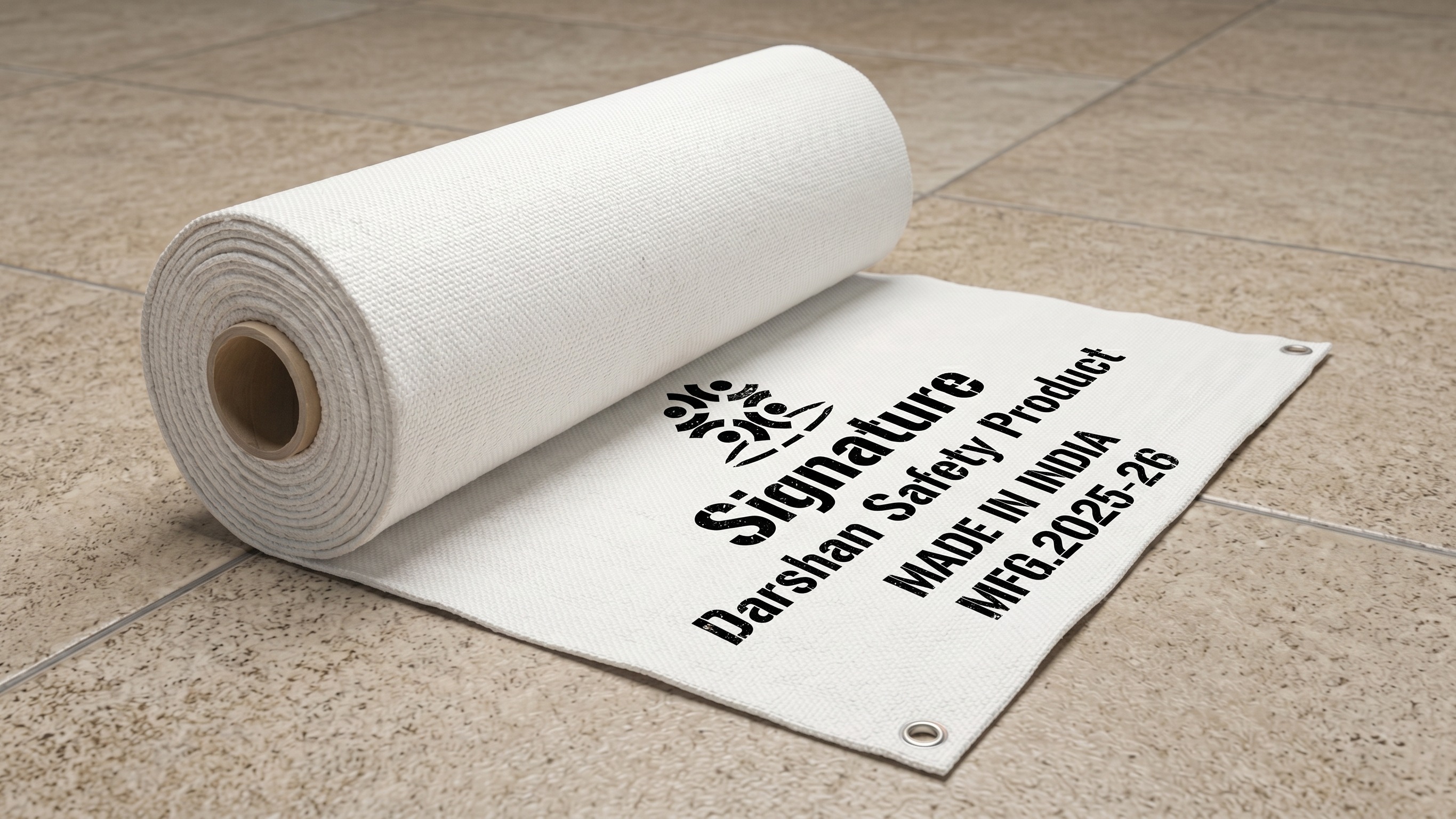
Ceramic Products
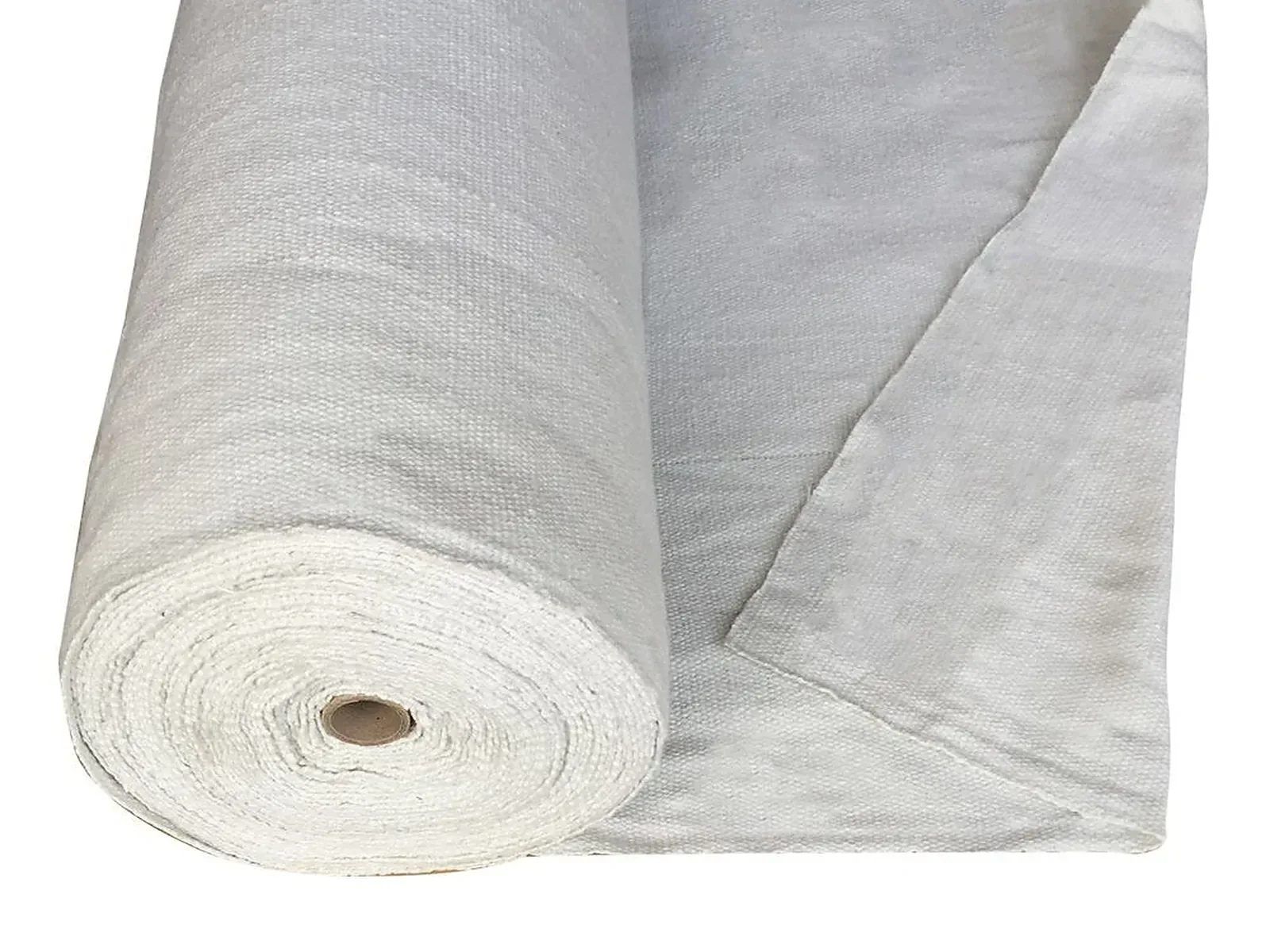
Signature Ceramic Fiber Fabric
Metallic or non-metallic · 1.5 to 6.0 mm · priced per square metre
₹510.00/ SQM
Signature ceramic fiber fabric · Kolkata & Howrah
Most Howrah foundries melt in cupolas, while about one in ten runs an induction furnace for ductile iron and steel. That difference decides the cloth: a cupola screen wants stainless reinforcement for strength, while a wrap near an induction coil must carry no metal at all. We make both Signature builds, from 1.5 mm to 6.0 mm, cut them to your length × width at our Ahmedabad factory and dispatch them to your unit.
Ceramic Products
Metallic or non-metallic · 1.5 to 6.0 mm · priced per square metre
₹510.00/ SQM
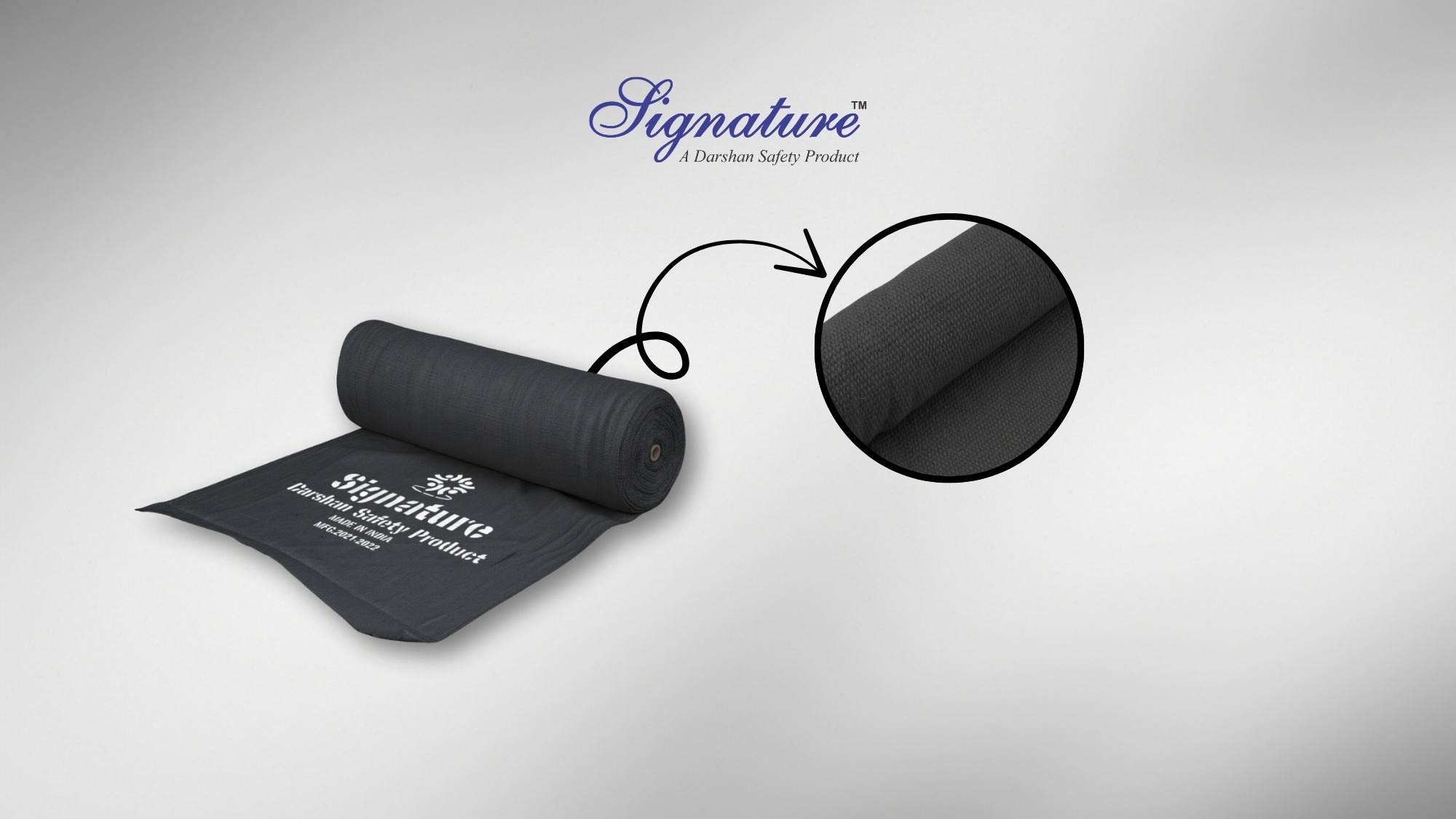
Graphite Coated Ceramic Fabric DSZGCF3.0 has a sealed black face on both sides, so a door or lid cover that is handled every charge wears more slowly and sheds fewer fibres.
Before thickness, decide whether the cloth may carry steel. In a cupola shop the reinforcement is an advantage. Beside an induction coil it is a problem.
| Attribute | SS reinforced | Non-metallic |
|---|---|---|
| Models | DSZCF1.5, 2.0, 3.0, 3.0P, 4.0, 5.0 and 6.0 | DSZCF3.0NM only |
| Thickness and weight | 1.5 mm to 6.0 mm, 800 to 3500 GSM | 3.0 mm, 1000 GSM |
| Listed temperature | 1000 °C to 1760 °C (1.5 and 2.0 mm); 1260 °C to 1760 °C (3.0 mm and up) | 1260 °C to 1760 °C |
| What the build gives you | Stainless strands in the yarn add body and tear resistance when the cloth is pulled tight or moved | Plain ceramic cloth with no metal to conduct, heat up or mark the surface |
| Typical Howrah job | Cupola tapping screens, ladle-area barriers, furnace-door and lid wraps | Wraps and covers near induction coils, busbars and furnace panels |
Howrah's foundry cluster, around 320 units across the river from Kolkata, is concentrated in a handful of localities, with newer units in organised parks further out in the district. The furnace each area runs decides where to start.
| Area | Furnace work there | Start with | Order |
|---|---|---|---|
| Liluah and BelgachiaFoundry and steel re-rolling localities | Cupola melting for grey-iron castings, plus reheating furnaces in the Liluah re-rolling mills. Screens at the tapping spout and wraps on furnace doors take radiant heat and get pushed aside many times a shift. | DSZCF4.0 or DSZCF5.0 | |
| Salkia and Benaras RoadCupola foundry belt, north Howrah | Cupola foundries casting the cluster's typical sanitary, pump-body and machinery work. Lining repairs between melts need insulating covers over the cupola shell and spout while the crew works. | DSZCF3.0P or DSZCF4.0 | |
| Dasnagar and BalitikuriFoundries beside engineering units | Foundries working next to engineering units. Where a unit melts ductile iron or steel in an induction furnace, cloth near the coil, panels or busbars should carry no steel. | DSZCF3.0NM near the coil; DSZCF3.0 elsewhere | |
| Jangalpur and SantragachiFoundry localities, south Howrah | Repeat casting runs, with annealing furnaces used for finishing across the cluster. Door seals and lid wraps are opened every charge, so the cloth face wears before the heat damages it. | DSZGCF3.0 or DSZCF3.0P | |
| Foundry Park, Ranihati–Amta RoadOrganised foundry park, Howrah district | New and expanding melt shops. Commissioning a furnace calls for a mix of thicknesses at once: thin cloth for small fittings and heavy cloth for fixed barriers. | DSZCF2.0 to DSZCF6.0 on one order | |
| Uluberia Industrial ParkWBIIDC industrial park, Howrah district | Iron and steel casting alongside engineering and fabrication. Heat-treatment and pre-heat wraps on fabricated parts, and fixed barriers near furnaces during plant maintenance. | DSZCF3.0; DSZCF6.0 for fixed barriers |
With the build chosen, pick the thickness. More millimetres and GSM put more insulating mass between the heat and what sits behind the cloth. Note that the two thinnest builds start at a lower listed temperature. For how to read these ranges, see our guide to temperature ratings.
| Model | Thickness | Weight | Build | Reference roll | Listed temperature | Order |
|---|---|---|---|---|---|---|
| DSZCF1.5 | 1.5 mm | 800 GSM | SS metallic reinforced | 1 × 30 m | 1000 °C to 1760 °C | |
| DSZCF2.0 | 2.0 mm | 950 GSM | SS metallic reinforced | 1 × 30 m | 1000 °C to 1760 °C | |
| DSZCF3.0 | 3.0 mm | 1000 GSM | SS metallic reinforced | 1 × 30 m | 1260 °C to 1760 °C | |
| DSZCF3.0P | 3.0 mm | 1500 GSM | SS metallic reinforced | 1 × 30 m | 1260 °C to 1760 °C | |
| DSZCF3.0NM | 3.0 mm | 1000 GSM | Non-metallic ceramic cloth | 1 × 30 m | 1260 °C to 1760 °C | |
| DSZCF4.0 | 4.0 mm | 1800 GSM | SS metallic reinforced | 1 × 30 m | 1260 °C to 1760 °C | |
| DSZCF5.0 | 5.0 mm | 2500 GSM | SS metallic reinforced | 1 × 30 m | 1260 °C to 1760 °C | |
| DSZCF6.0 | 6.0 mm | 3500 GSM | SS metallic reinforced | 1 × 20 m | 1260 °C to 1760 °C | |
| DSZGCF3.0 | 3.0 mm | 1000 GSM | Graphite coated both sides, black | 1 × 30 m | 1260 °C to 1760 °C |
The three 3.0 mm builds differ in how they are made, not in thickness. DSZCF3.0P is denser at 1500 GSM, DSZCF3.0NM has no steel, and DSZGCF3.0 is graphite coated. All DSZCF cloth is white; the reference rolls are formats, not minimum orders.
Not every furnace job in a foundry needs ceramic fibre. Check the working temperature first, then pick the material.
Our fiberglass vs ceramic fiber guide compares the two materials job by job.
These six details let us quote fabric, coated fabric and seals for several furnaces on one quotation.
We cut every piece to your sizes at our Ahmedabad factory and dispatch it to the foundry or plant address on the order. We have no branch, dealer or warehouse in West Bengal and do not promise delivery times on this page. The quotation confirms dispatch for your models and quantities, so include the date you need the material.
Fabric covers faces and openings. Door glands, flat joints and ready-made blankets are separate Signature products you can add to the same order.
Check the material and the temperature listing, or see the wider foundry protection programme.
Where each material belongs, compared by working temperature and job.
Open guideHow to read a listed range like 1260 °C to 1760 °C against your furnace.
Open guideHeat protection for melting, pouring, casting and furnace maintenance.
Open industry journeyFabric, graphite-coated fabric, rope, tape and the rest of the ceramic range.
Browse ceramic productsTell us the furnace type and the heat source if you are unsure which build to pick.
Open contact formAnswers for Howrah and Kolkata foundry, furnace and maintenance buyers ordering Signature ceramic fiber fabric.
A heavier SS metallic reinforced build. DSZCF4.0 (4.0 mm, 1800 GSM) and DSZCF5.0 (5.0 mm, 2500 GSM) are listed at 1260 °C to 1760 °C and keep their shape when a screen is pushed aside at every tap. For a screen bolted in place that rarely moves, DSZCF6.0 (6.0 mm, 3500 GSM) puts the most mass between the spout and the floor behind it.
DSZCF3.0NM. It is plain ceramic cloth with no stainless steel in the weave, at the same 3.0 mm and 1000 GSM as DSZCF3.0 and the same listed 1260 °C to 1760 °C. Every other DSZCF model carries SS reinforcement, so keep those away from the coil and live electrical parts.
Check the furnace's real working temperature first. Ceramic fiber fabric is meant for duty where glass or silica cloth is out of range. If your annealing furnace runs well inside a fiberglass cloth's listed range, fiberglass may be the more economical choice. Our fiberglass vs ceramic fiber guide sets the two side by side.
The two thin builds are listed at 1000 °C to 1760 °C. DSZCF3.0 and every thicker model are listed at 1260 °C to 1760 °C. When a furnace job sits between 1000 °C and 1260 °C, specify 3.0 mm or thicker instead of relying on the thin cloth, and confirm the range on the variant you pick on the product page.
DSZCF3.0P. It stays at 3.0 mm, so it still fits the same door frame or clamp, but it weighs 1500 GSM against 1000 GSM on the standard DSZCF3.0. That gives a denser cloth without stepping up to the 4.0 mm build.
When the same cover is lifted, dragged or refitted every heat. Signature Graphite Coated Ceramic Fabric DSZGCF3.0 is 3.0 mm and 1000 GSM, graphite coated on both sides and listed at 1260 °C to 1760 °C. The sealed face resists rubbing and sheds fewer fibres than the white cloth. For insulation that is fitted once and left alone, the uncoated DSZCF cloth is enough.
Ceramic fibre is the usual non-asbestos replacement for asbestos cloth in furnace and foundry work, and Signature Ceramic Fiber Fabric contains no asbestos. Match the thickness to the old cloth and check the listed temperature for the door. Handle and cut it under your site procedure for ceramic fibre, since it is still a high-temperature mineral fibre.
It is sold by the square metre. On the product page, choose the model and enter the length and width in metres, and the fabric is cut to that size. The 1 × 30 m roll (1 × 20 m for DSZCF6.0) is only a reference format. For several furnaces, list each piece as its own model and size line.
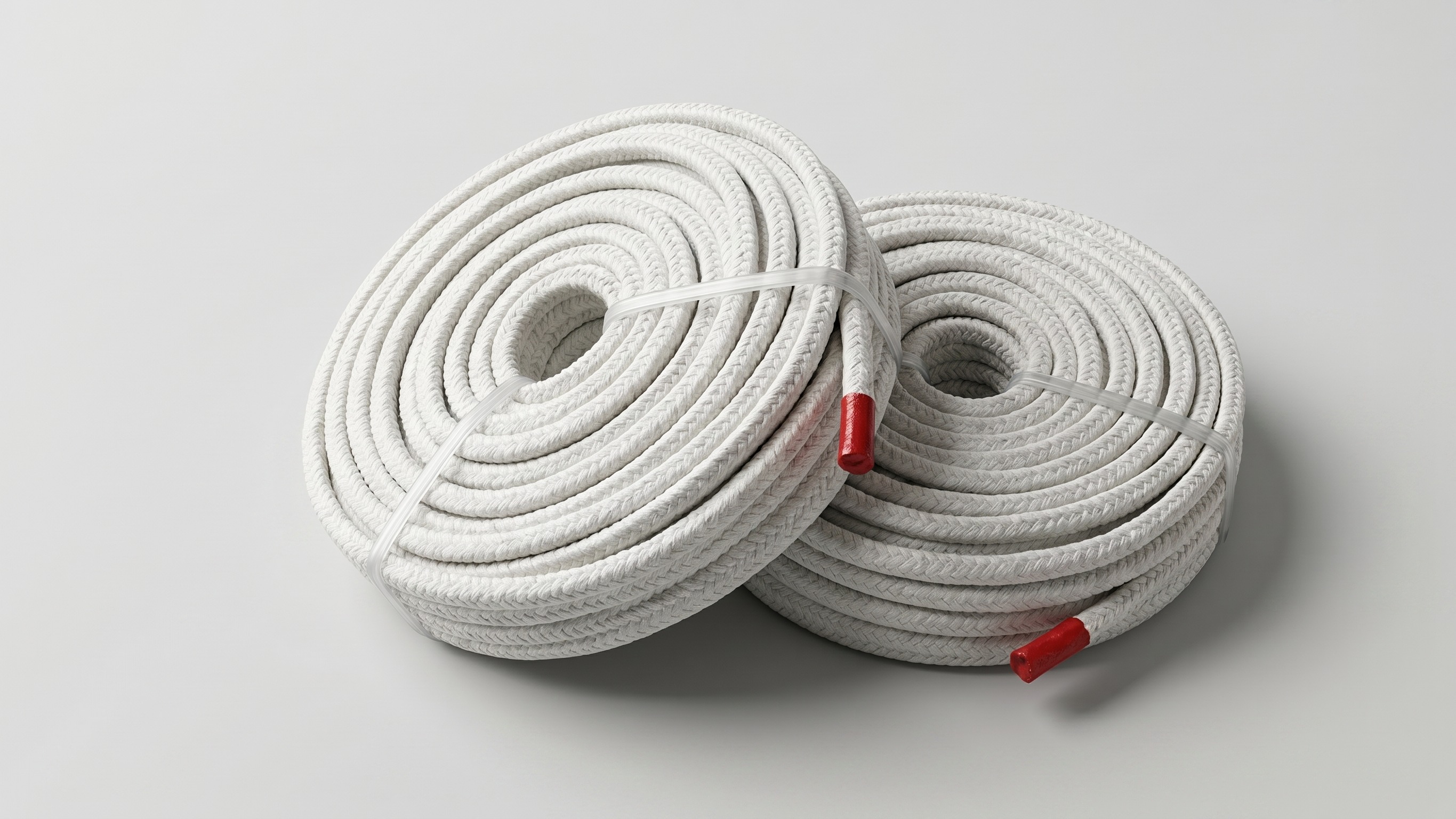
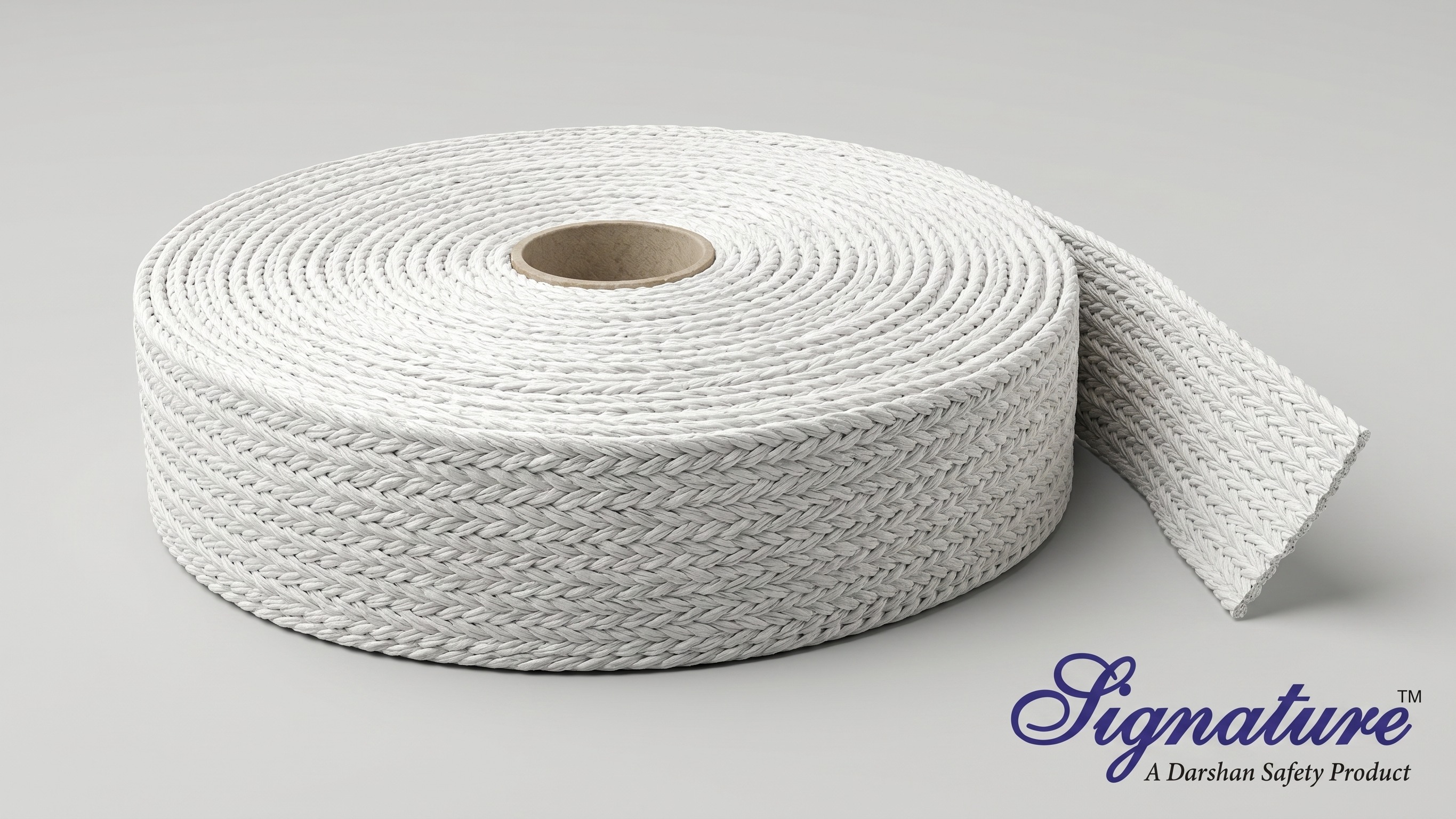
Yes. Signature Ceramic Fiber Rope (DSZCRP, 6 mm to 50 mm, round or square, sold per kg) and Signature Ceramic Fiber Tape (DSZCTP, 3 mm and 5 mm sections, sold per kg) can be quoted with the fabric. Put each item on its own line with the size or diameter and the quantity.
No. Darshan Safety Zone, an ISO 9001:2015 certified manufacturer, makes Signature ceramic fiber fabric at our factory in Ahmedabad, Gujarat, and dispatches it to the unit address on your order in Howrah, Kolkata or elsewhere in West Bengal. The quotation confirms dispatch for your models and quantities.
Send the furnace type, the build, each piece's length × width and the date you need it. We will quote fabric and seals together from our Ahmedabad factory.