
Darshan Safety Zone
Back to InsightsSignature Aluminized Apron in Dehradun City
Specify Aluminized Apron Layers

In this article
An aluminized apron is the silver front-body PPE you specify when a Selaqui furnace bay or boiler outage puts radiant heat on the worker's chest.
You may be writing the indent for a fabrication shed on the Selaqui Industrial Area, a hydropower boiler house on an outage window, or a glass-line bay that still runs hot after the night shift. The apron does not change with the pin code. Match the radiant job, the layer model, and the way your site wears torso PPE.
Name the radiant job on the bay
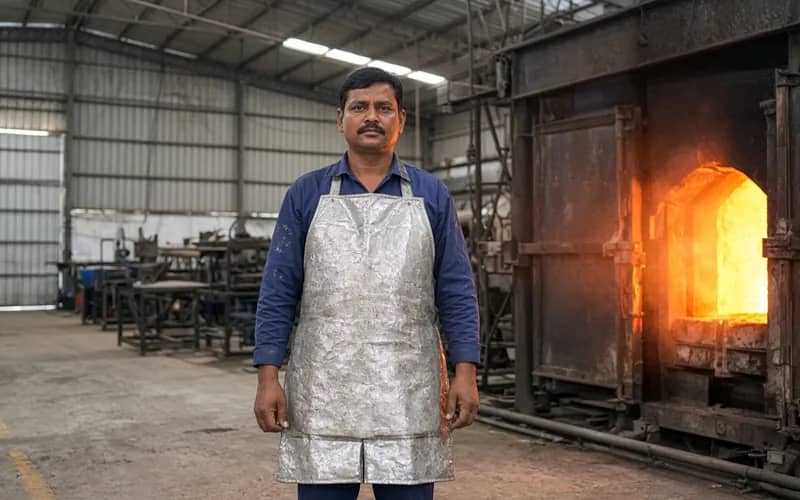
You are the person who has to name the PPE on the requisition. Outside the shed in Dehradun the air can feel cool. Inside the bay the face of the furnace, the open ladle path, or the boiler casing still throws radiant heat at the chest and belly of the person standing there.
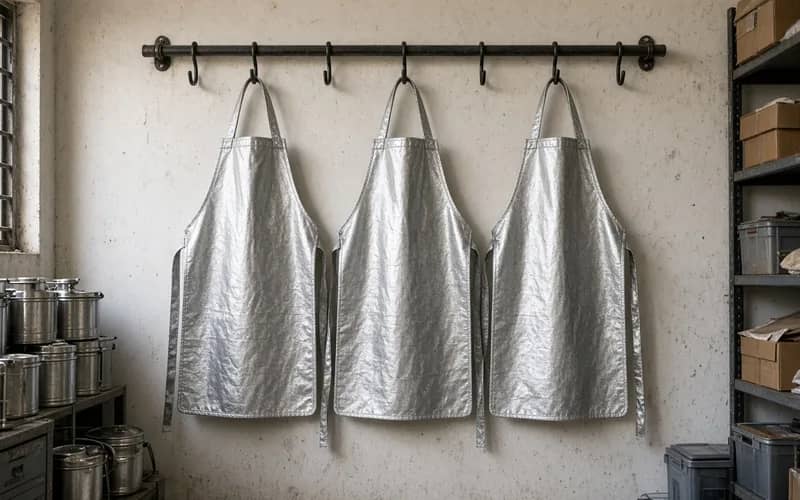
Signature Aluminized Apron is torso PPE with a pure aluminium foil coated silver face. It covers the front body. It is not a full coat, and it is not a fire proximity suit. Write the job so stores does not send the wrong kit.
Put it on the work this apron is listed for.
- Furnace and foundry torso duty: standing at a hot face where radiant heat hits the chest.
- Steel and molten-metal adjacent work: front-body cover when splash risk sits in front of the worker.
- Glass-line heat: short spells beside a hot production face in a fabrication or process shed.
- Boiler and outage maintenance: hydropower or plant boiler work where the casing is still hot during the window.
Walk the bay before you raise the indent. Note whether the heat is radiant from an open face, whether the worker faces the source for the whole spell, and whether a coat or a proximity suit is already named on the method. A Selaqui fabrication bay and a boiler outage on a hill plant can share the same apron family and still need different layer models.
If the drawing already calls for a full Signature Aluminium Coat or a fire proximity suit, stop. This SKU is the apron accessory. Swapping an apron in for a coat leaves the arms and back uncovered.
On the indent, write the job in plain words, such as “furnace face, front torso, radiant heat”. That line stops the wrong garment leaving stores.
Pick the layer model for the duty
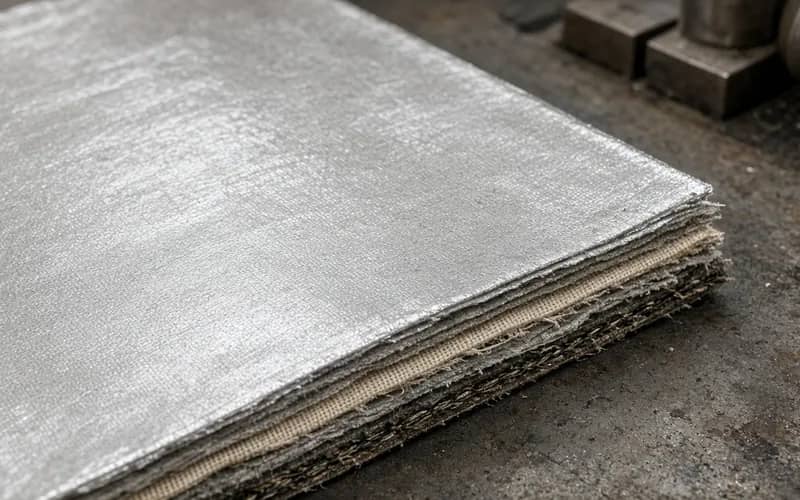
The habit on old indents is to write “aluminized apron” and leave the model blank. That habit misses this product. Signature Aluminized Apron is sold per piece (NOS) in four layer builds. Size is 24 × 36 inch on every row. Colour is silver. Coating is pure aluminium foil coated. The working temperature on every model is 600 °C to 800 °C.
Choose the layer count for the duty in front of you.
- DSZALAP2.0 — 2 Layer
- DSZALAP3.0 — 3 Layer
- DSZALAP4.0 — 4 Layer
- DSZALAP5.0 — 5 Layer
Layer count is the variant axis. The product is not customizable beyond those four builds. Do not invent a fifth size, a different length, or a special closure on the indent. Weight is listed as as per actual; do not invent a kilogram figure to fill a form.
Ask the bay lead how long the worker stands at the hot face and how close they stand. A short inspection spell and a long pour shift are not the same duty, even when both sit in the same Selaqui shed. Put the model number on the indent with the size and the temperature window. A line that only says “silver apron” will be guessed in stores.
If your site PPE procedure already names a layer count, copy that model. Do not drop a layer to make the apron feel lighter.
Wear foil face out and check fit
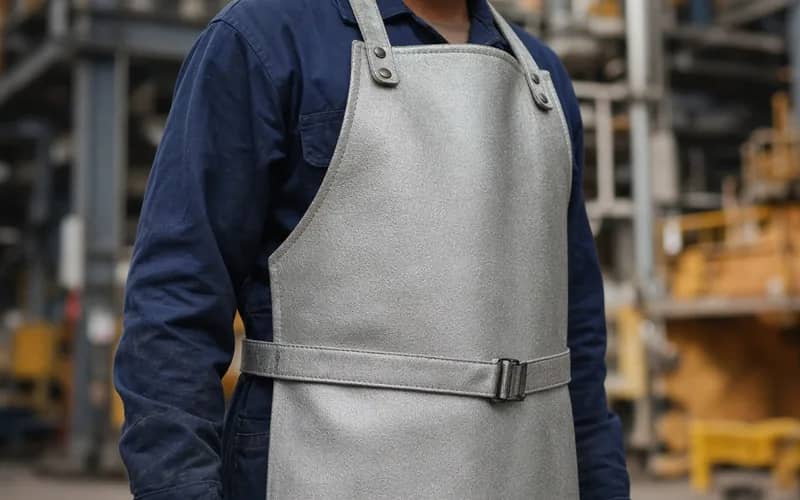
The apron only helps if the foil face looks at the heat and the straps hold for the whole spell. Hand the wearer the model with the garment, not after they have already stepped to the furnace face.
- Step 1: Match the model tag to the indent before anyone puts the apron on.
- Step 2: Wear it over the work clothing your site PPE procedure already names. Keep the silver foil face outward toward the radiant source.
- Step 3: Fasten the straps so the 24 × 36 inch panel sits square on the chest and belly. A twisted panel leaves a strip of clothing bare to the heat.
- Step 4: Check that arms stay free for the task. This is an apron, not a coat. If the method needs arm cover, stop and get the coat named on the method.
- Step 5: After the first heat spell, look again. A strap that slipped, a panel that folded, or a foil face turned inward means the next spell starts with a fix, not a shrug.
On a Dehradun outage window the outside air may feel mild while the boiler casing is still hot. Do not treat the apron as optional because the yard is cool. Radiant heat at the face does not follow the weather report.
If the foil face is inward, stop the job and reverse the apron before anyone steps back to the hot face.
Inspect seams before every shift
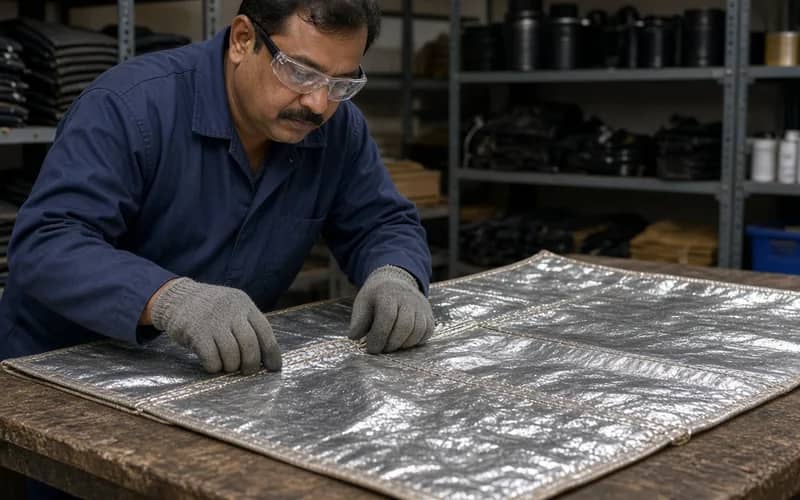
Stores should not issue an apron that already failed the last shift. Make the check part of the hand-out, not a favour someone remembers after a burn scare.
- Step 1: Lay the apron flat or hang it loosely. Look at the silver foil face under good light.
- Step 2: Check seams, strap roots, and the panel edges for tears, burn-through, or foil that has lifted from the base fabric.
- Step 3: Retire the piece if the foil is delaminated, cracked along a hard fold, or burned through. Do not patch radiant PPE with tape from the tool crib.
- Step 4: Store dry, flat or loosely hung. Sharp folds crack the foil face and shorten the life of the next shift’s kit.
Keep spare aprons with the model written on the bin, not on a scrap of paper that will be lost. A hydropower outage and a night pour on a Selaqui line should not start with a search through unmarked silver panels.
Train the bay lead and the stores hand on the same retire rule. One person who “knows the apron still looks fine” is how a damaged face returns to the furnace door.
If the foil lifts when you flex a corner, do not issue that apron. Raise a replacement indent for the same model number.
Made in Ahmedabad, sent to site
Signature Aluminized Apron is made by Darshan Safety Zone in Ahmedabad, under the Signature brand. The company has made fire safety and heat protection products since 2012, and its quality system is certified to ISO 9001:2015.
Orders can be dispatched across India, including to a site in Dehradun, and freight is confirmed in the quotation. There is no counter in Dehradun, and there is no same-day promise.


Discussion (0)
Join the conversation
Sign in to leave a comment for our applications team.
Sign in to comment