
Darshan Safety Zone
Back to InsightsSignature High Silica Fabric in Rishikesh
Specify High Silica Fabric Model

In this article
High silica fabric is the cloth you specify when a hydropower boiler casing or furnace face in a Rishikesh workshop outruns ordinary fiberglass.
You may be writing the indent for a turbine-house lagging job on the Ganga corridor, a fabrication bay that serves hillside infrastructure, or a small workshop that still runs hot after the tourist traffic fades. The cloth does not change with the pin code. Match the surface, the model, and the metres you need.
Name the extreme-heat surface
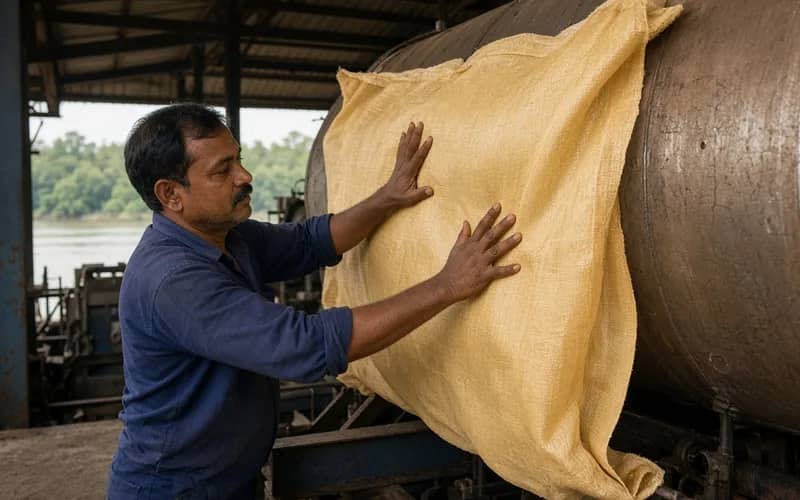
You are the person who has to name the material on the requisition. Outside a Rishikesh shed the air can feel mild. Inside, a boiler casing, a furnace face, or a duct that still carries process heat can sit well above what ordinary fiberglass cloth is listed for.
Signature High Silica Fabric is a non-asbestos industrial fabric sold by the square metre. It is cloth for extreme heat wraps and covers. It is not a finished fire blanket, and it is not fiberglass cloth under another name.
Put it on the jobs this fabric is listed for.
- Furnace and foundry wraps: a sheet or wrap on a face that runs hotter than E-glass cloth.
- Boiler and turbine-house lagging: hydropower or plant outage work where the casing stays hot in the window.
- Heavy heat-zone covers: removable covers and shields cut from the cloth for a named opening.
- Non-asbestos programmes: replacing legacy cloth where the drawing asks for high silica, not glass fibre.
Walk the job before you raise the indent. Write what the cloth will touch, how long it stays up, and whether the surface sits in the 1100 °C to 1800 °C window listed on these models. A hillside fabrication bay and a turbine-house outage can share the same family and still need different thicknesses.
If the drawing already calls for ordinary Signature Fiberglass Cloth, stop. That cloth has its own temperature rows. Do not swap high silica in because the name sounds stronger, and do not swap fiberglass in when the drawing names high silica.
On the indent, write the surface in plain words, such as “boiler casing wrap, stays on”. That line stops the wrong roll leaving stores.
Pick uncoated or silicon-coated
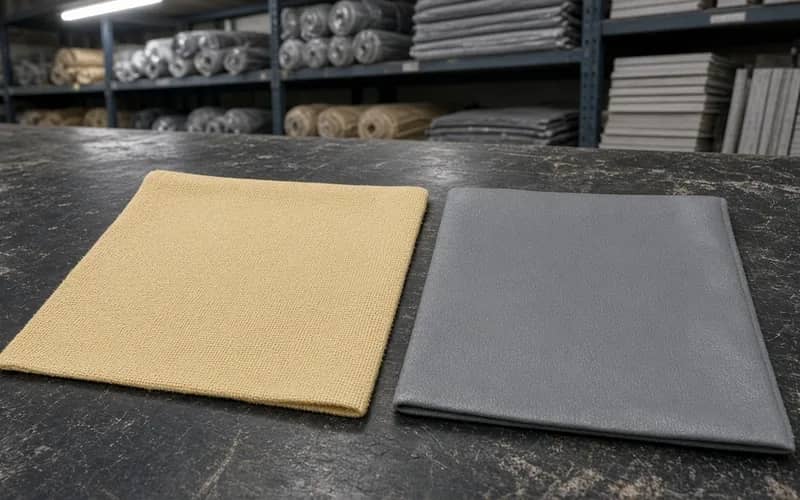
This product lists both uncoated and both-side silicon coated builds. Every model on the page carries a working temperature of 1100 °C to 1800 °C. The choice is thickness, GSM, and coating — not a different temperature story for each colour.
Uncoated rows are light golden and listed as 100% itching proof material.
- DSZHS80.0.8 — 0.8 mm, 600 GSM
- DSZHS96.0.6 — 0.6 mm, 680 GSM
- DSZHS96.0.8 — 0.8 mm, 680 GSM
- DSZHS96.1.2 — 1.2 mm, 1100 GSM
- DSZHS96.1.3 — 1.3 mm, 1200 GSM
- DSZHS96.1.4 — 1.4 mm, 1250 GSM
Coated rows on this product are grey and both-side silicon coated: DSZSHS96.0.8 at 0.8 mm and 850 GSM, and DSZSHS96.1.4 at 1.4 mm and 1250 GSM.
Ask the insulation lead whether the job needs a bare high-silica face or a silicon-coated face. Do not order the coated code because it looks denser on a photo. Read the coating column. A sibling page for silicon-coated high silica also exists; for this indent, stay on the models listed for Signature High Silica Fabric.
Write the model number, thickness, GSM, and coating on the indent. A line that only says “high silica” will be guessed in stores.
Order length and width in metres
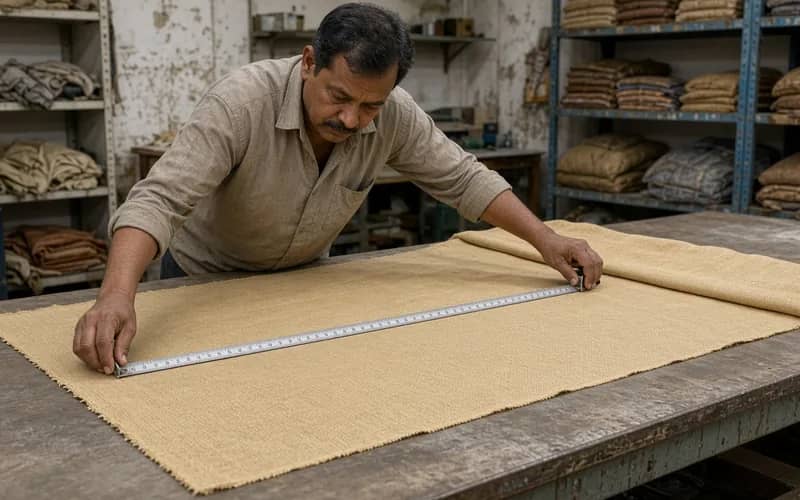
You buy this fabric by the square metre. On the product page you enter length and width in metres. You are not picking a finished blanket off a size chart. The API reference roll is 1 × 50 m. That figure describes the reference. The order is still the length and width you type.
Measure the surface you will wrap or cover. Add the lap your method needs. Multiply length by width and check the square metres against the cut plan before you send the indent. Six duct sections should not turn into one short offcut because the width box was left blank.
Leave old fixed-size lists off the indent. This product is not customizable beyond the listed models. You choose the model, then you enter the metres. Do not invent a special width because a hillside job used a different cloth last year.
Watch the unit. If a quote returns a number of pieces instead of square metres, you are looking at a finished cover or blanket, not this fabric. High silica fabric for lagging and covers is sold SQM.
If the unit on the indent is NOS and the job is a wrap, stop. Change the line to SQM with length and width in metres.
Cut, fit, then check the cloth
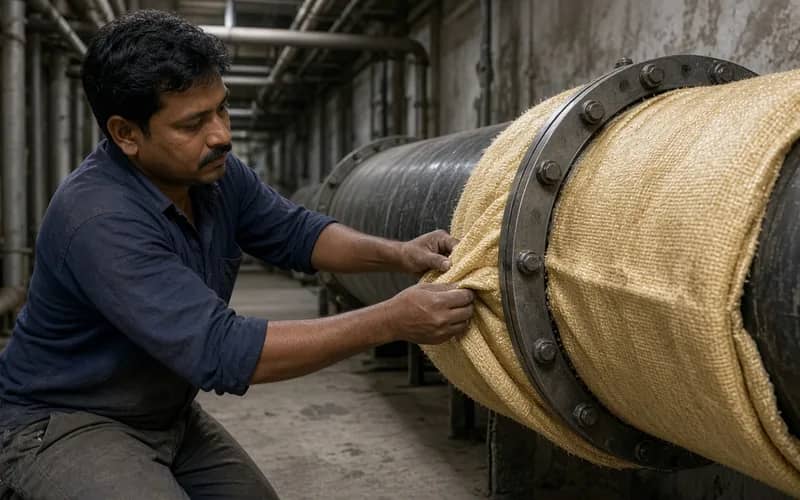
The cloth only helps if the fitter knows which model they were given. Hand over the model number with the roll, not after the first cut on a turbine-house outage or a workshop night shift.
- Step 1: Match the model on the roll to the indent before anyone cuts.
- Step 2: Cut square to the surface you measured, with the lap your wrap needs. Do not stretch a short piece over a flange and hope the seam holds.
- Step 3: Lay the cloth on a clean bench. Grit and oil worked into the weave stay in the weave.
- Step 4: Fix it the way the job method already says. The cloth is the barrier. It is not the fastener.
- Step 5: After the first heat cycle, walk the line. Look for a gap, a scorched edge, or a coated face that has blistered.
Store spare cloth dry, with the model written on the bin. A cool morning on the Ganga corridor does not mean the next outage can start with unmarked offcuts. Inspect coating and weave before issue; retire a piece that is torn, burned through, or delaminated.
If the edge is frayed or the piece has a hole before it goes up, cut past the damage or take another length.
Made in Ahmedabad, sent to site
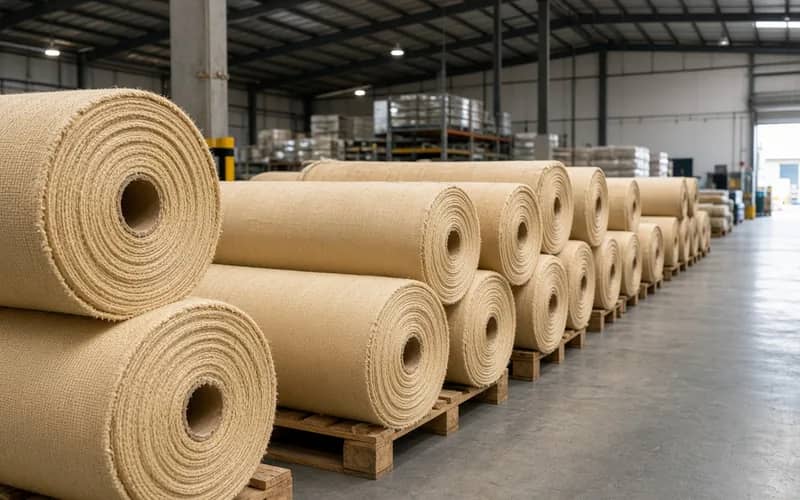
Signature High Silica Fabric is made by Darshan Safety Zone in Ahmedabad, under the Signature brand. The company has made fire safety and heat protection products since 2012, and its quality system is certified to ISO 9001:2015.
Orders can be dispatched across India, including to a site in Rishikesh, and freight is confirmed in the quotation. There is no counter in Rishikesh, and there is no same-day promise.


Discussion (0)
Join the conversation
Sign in to leave a comment for our applications team.
Sign in to comment